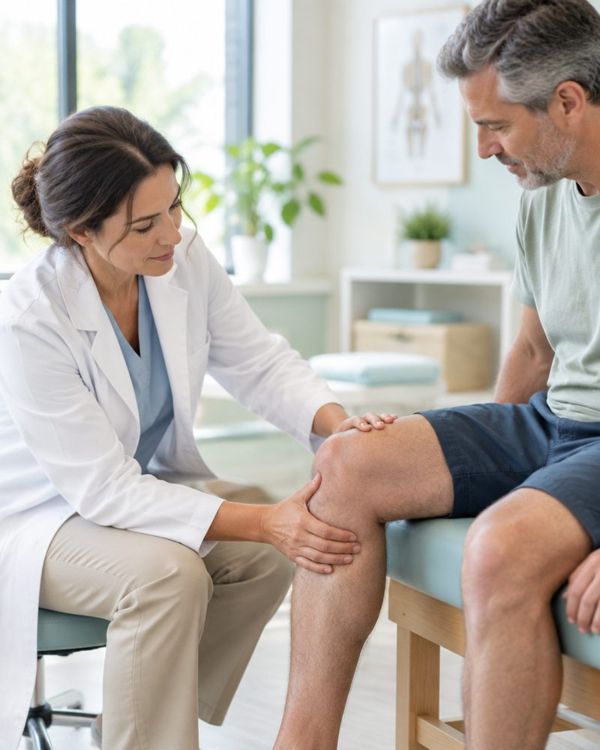

Joint health is very important for facilitating one's ability to walk, bend and stretch to perform various daily tasks with ease. Once joint suffers from injury, degeneration or another problem with cartilage, movement might become difficult and stiff.
People exploring joint regeneration in Abu Dhabi often want to understand whether regenerative medicine can help improve joint function. The field of regenerative medicine employs different methods to deal with the treatment of injuries and diseases causing problems for joint functions.
It should be noted that the term "joint regeneration" covers several treatments and depends on the type of problem, its severity and the patient's health condition. The assessment has to be performed in order to find the best possible solution for treating the damaged joint.
At Synergy Medical Centre, you can enquire about available regenerative medicine services and whether a consultation is appropriate for your concerns.
Understanding Joint Cartilage Regeneration in Abu Dhabi
Cartilage is smooth and acts as protection along bone ends where the bones meet in joints. It is beneficial in decreasing friction and distributing loads during motion. Damage to cartilage is hard to heal as it possesses limited capabilities of self-healing; therefore, injuries can prolong problems like pain or stiffness.
Interest in joint cartilage regeneration in Abu Dhabi reflects the search for approaches that may help address cartilage-related joint problems. Treatment depends on whether the damage is linked to an injury, osteoarthritis, or another condition.
A healthcare professional may review your symptoms, medical history, mobility, and relevant imaging before discussing available options. Depending on the diagnosis, care may involve physiotherapy, exercise, medication, activity modification, or selected surgical procedures.
How Are Stem Cells for Joint Regeneration in Abu Dhabi Being Studied?
Research into stem cells for joint regeneration in Abu Dhabi forms part of the wider investigation into biological approaches to musculoskeletal health.
Scientists are studying how certain cell types and cell-derived materials may influence the environment around damaged tissues. Research includes questions about inflammation, tissue responses, and potential effects on joint symptoms.
The evidence depends on the specific procedure, the condition being treated, and the quality of clinical studies available.
Factors That Influence Joint Regeneration Treatment Options
The appropriate approach to joint care depends on several factors, including the underlying diagnosis, the extent of cartilage damage, joint function, medical history and previous treatments. Age and general health may also be relevant to the clinical assessment.
Depending on the condition, a healthcare professional may discuss established treatments, rehabilitation, medication or selected procedures. Regenerative approaches should be considered only when appropriate for the individual condition, with a clear understanding of the available evidence, potential risks and realistic outcomes.
Who May Need an Assessment for Joint Regeneration?
People experiencing persistent joint pain, stiffness, swelling, or restricted movement may benefit from a medical assessment to determine the underlying cause.
A consultation may help establish:
- The likely cause of joint symptoms
- Whether cartilage damage or another condition is involved
- Which established treatment options may be suitable
- Whether an emerging regenerative approach has supporting evidence
- The possible risks, costs, recovery requirements, and expected outcomes
Make an Informed Decision About Joint Care
When exploring joint regeneration, prioritise a clear diagnosis, evidence-based guidance, and realistic expectations.
Contact Synergy Medical Centre to enquire about its current services and whether an appropriate consultation can be arranged.